The Group became a member of the TNFD Forum (*) in May 2025.
Through participation in the TNFD Forum, we will access international discussions and the latest insights regarding natural capital, establishing a foundation to promote effective initiatives from our position as a regional financial group.
- TNFD Forum: An international organization that supports discussions at the TNFD (Taskforce on Nature-related Financial Disclosures) as a stakeholder providing specialized expertise.

Our primary operating areas—Yamaguchi, Hiroshima, and Fukuoka prefectures—possess diverse natural capital, including rich marine resources facing the Sea of Japan and the Seto Inland Sea, forests spreading across mountainous areas, rivers, and wetlands, all of which are deeply connected to local industry and daily life.
This natural capital provides various ecosystem services that support our lives and economic activities, such as climate stabilization, water resource supply, soil retention, and the provision of habitats for organisms.
However, in recent years, the degradation of natural capital and the loss of biodiversity have become more severe due to the impact of all kinds of human activities, such as the progression of climate change, changes in land use, and excessive resource utilization, and there is a strong demand for companies to address these issues.
As a regional financial group, we believe we have a responsibility to actively participate in the conservation and restoration of such natural capital and will promote management based on coexistence with nature.
As a provider of financial services, the Group recognizes that its relationship with natural capital exists both directly and indirectly.
In addition to resource utilization and environmental impact in our own business activities, dependencies and impacts on natural capital also occur throughout the entire value chains of the companies we are involved with through investment and lending.
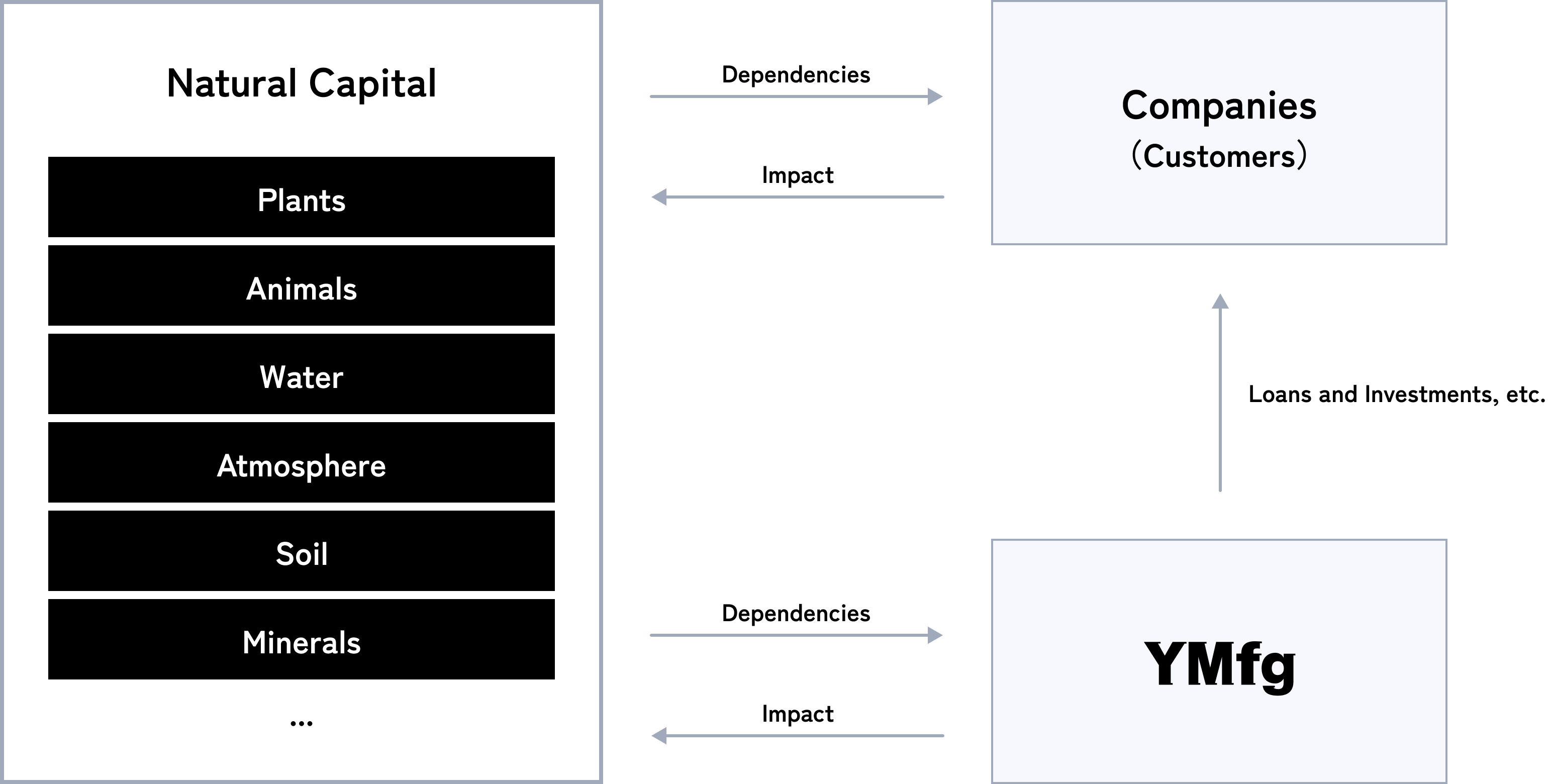
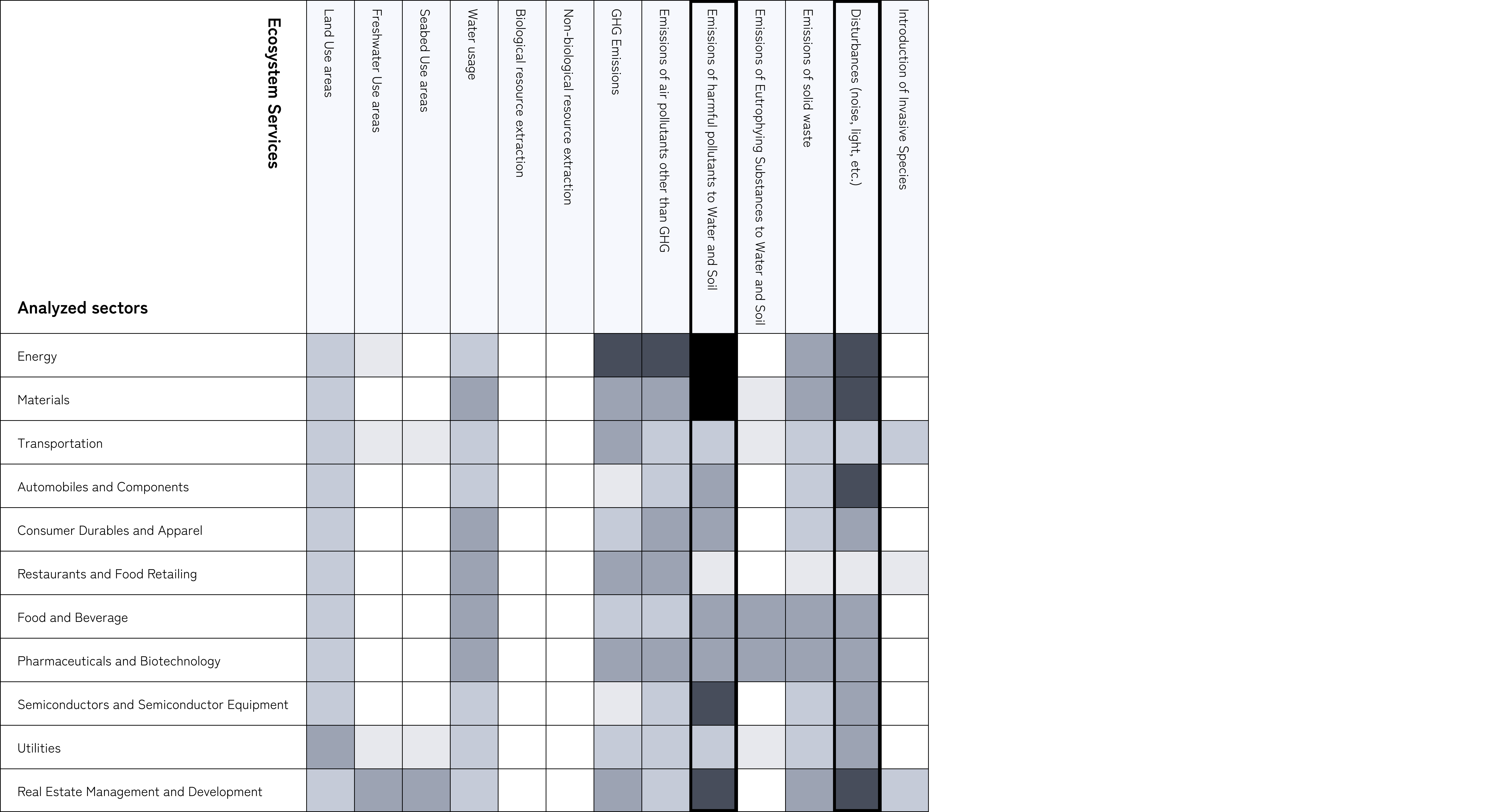
We are conducting a preliminary analysis using "ENCORE," a global tool for evaluating the magnitude of nature-related dependencies and impacts in business activities, to understand nature-related contact points at the sector level within the loan portfolios of the three banks in the Group.
As a result of the analysis, the trends in our loan portfolio showed a high "dependency" on water-related ecosystem services, and regarding "impact," there was a significant influence on "the discharge of harmful pollutants into water and soil" and "disturbances (such as noise and light)."
Dependencies on nature
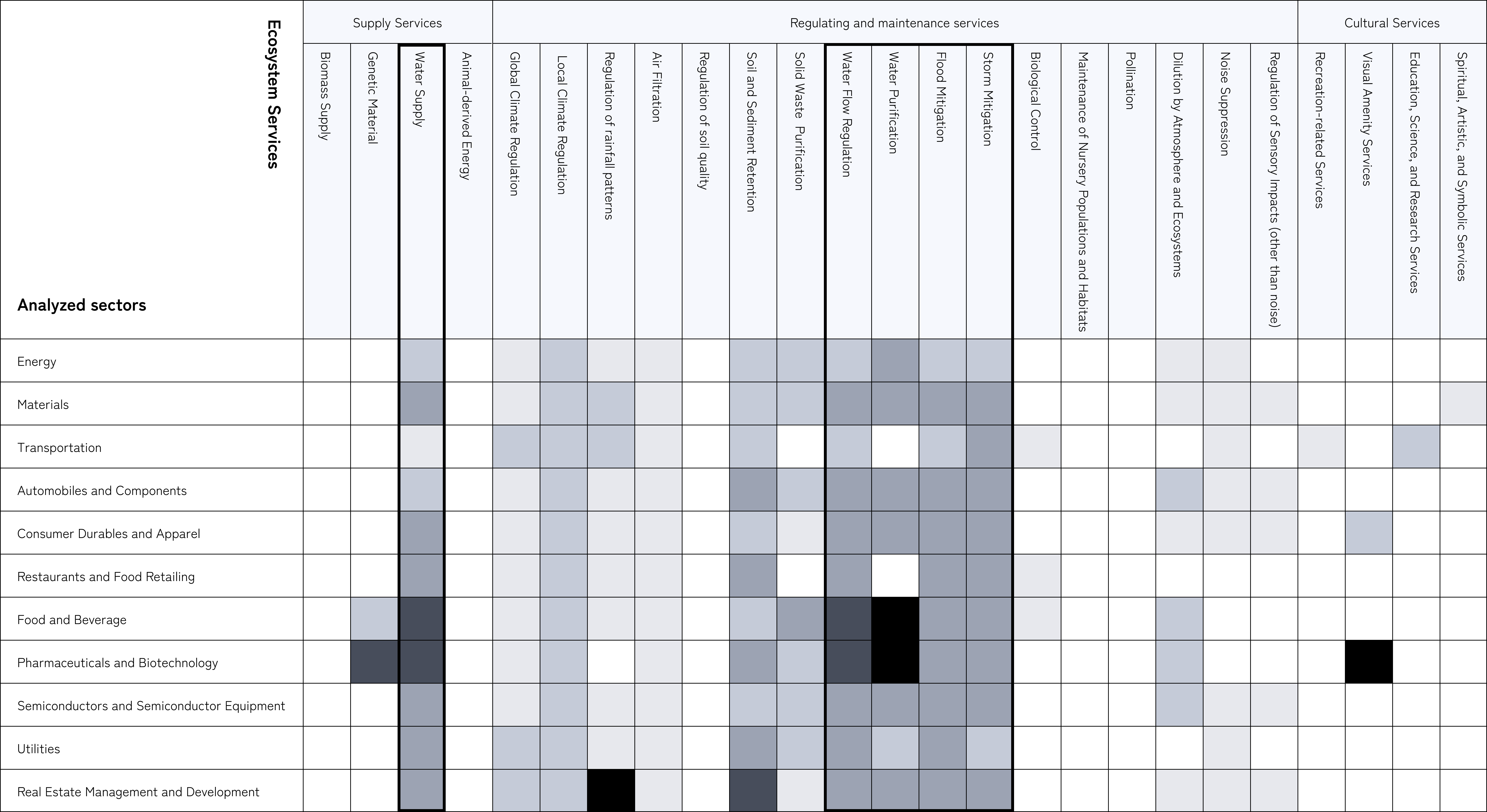

Dependencies on nature

- The intensity of the heatmap coloring reflects not only dependencies and impacts but also the proportion of loan balances.
- Sector classifications refer to the sector list in TNFD’s “Additional guidance for financial institutions.”
- Of the sectors list, “Household & Personal Products” is omitted here because at the time of analysis the loan balance for that sector was zero.
Impacts on nature
Moving forward, we aim to disclose information in line with TNFD recommendations, based on considerations following the LEAP approach (*) recommended by TNFD.
The LEAP approach consists of four steps: Locate (identifying contact points with natural capital), Evaluate (evaluating dependencies and impacts), Assess (analyzing risks and opportunities), and Prepare (developing and executing response measures).
Based on these steps, the Group plans to gradually deepen its initiatives related to natural capital.
While fulfilling our role as a regional financial group, we will continue activities that pass the value of natural capital on to the next generation and strive to enhance our information disclosure regarding natural capital.
- LEAP approach: An integrated approach developed by TNFD for assessing nature-related issues.